Include the flexibility range
Send representative material and production variants, not just one sample. Record how the component changes shape when supported or gripped and what deformation remains acceptable.
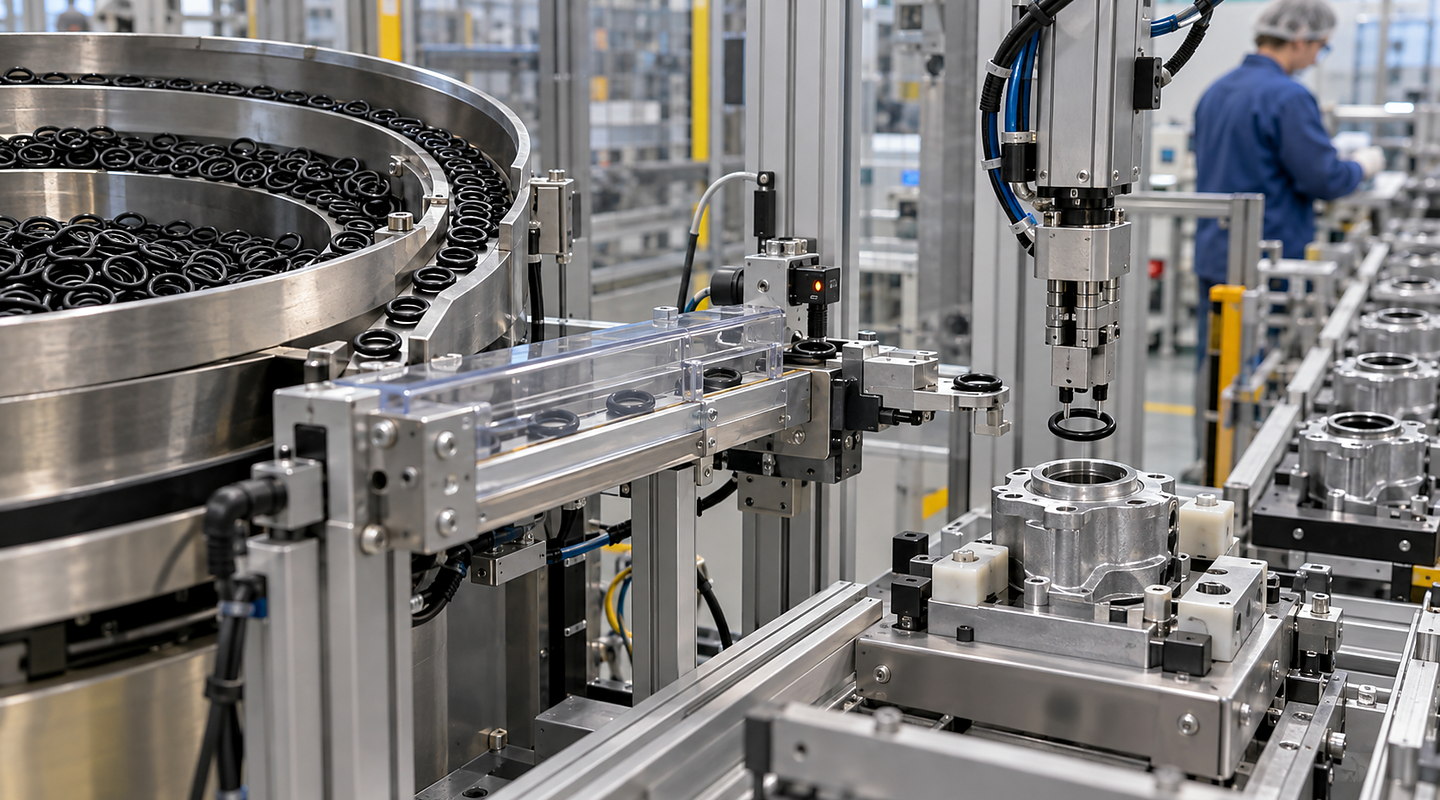
Plan rubber component feeders around real component variation, bulk condition, orientation, usable delivery rate and the downstream interface. Discuss representative part trials with Sorting Solutions.
Speak directly with Sorting Solutions about flexible rubber-component feeding.
Provide parts in their normal surface condition and across the expected flexibility range. Identify acceptable deformation and the orientation required at assembly. Trial loading, separation and release with stuck or overlapping parts, checking both delivery consistency and component condition after the feeding sequence.
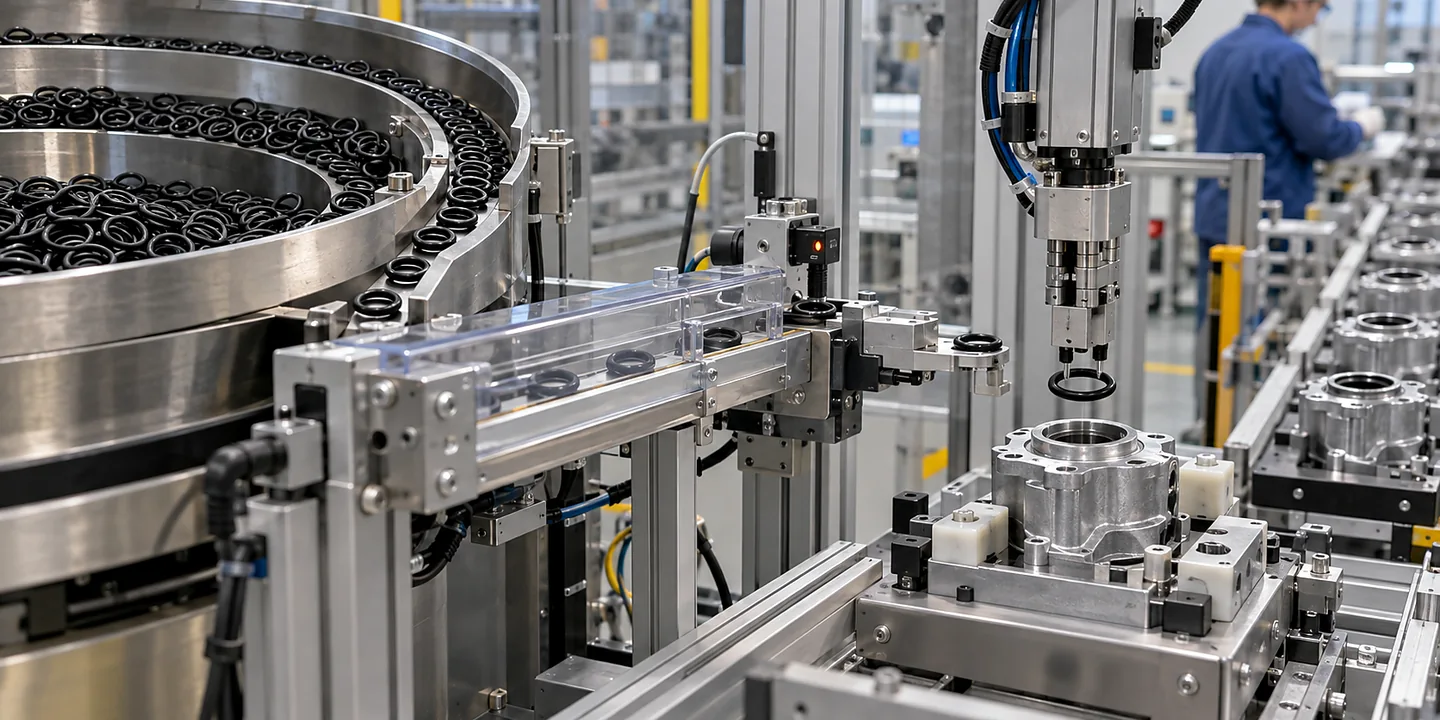
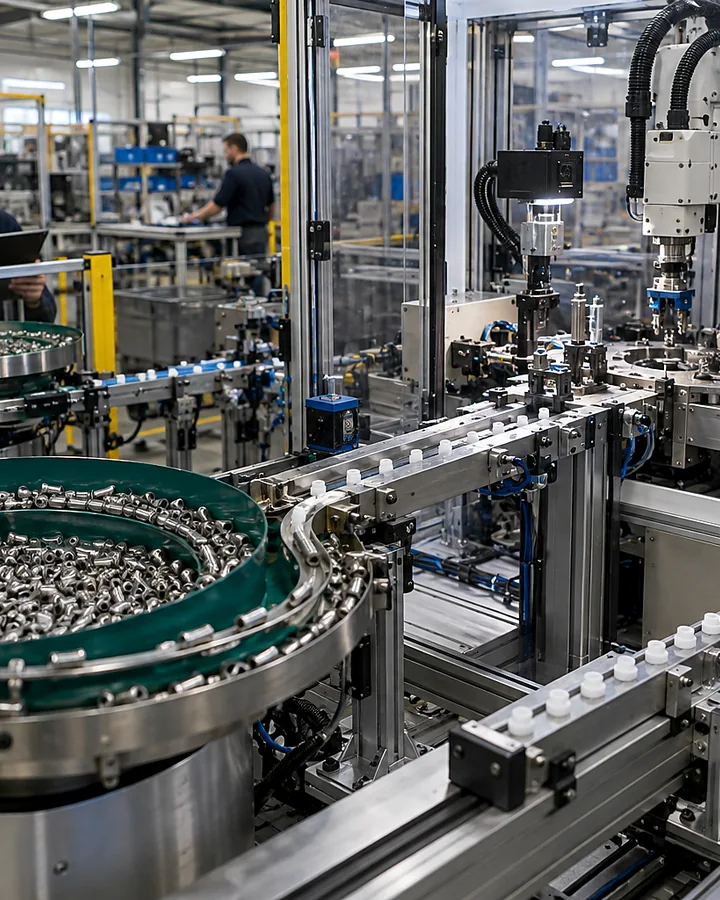

Flexible parts need to be assessed in their normal supplied condition. A dimensionally correct part may still stick, fold or overlap during presentation.
Send representative material and production variants, not just one sample. Record how the component changes shape when supported or gripped and what deformation remains acceptable.
Describe coatings, lubrication or residues present in production. Trial those conditions because cleaned demonstration parts may separate and travel differently from the supplied batch.
Observe how parts sit in the bulk load and after replenishment. Challenge joined, folded or nested examples where they occur, and define the route for a part that cannot be separated reliably.
Identify the face, edge or opening needed by the receiving operation. Assess whether the chosen support and sensing arrangement remains reliable when the component flexes.
Trial the complete pick or transfer, including release from the handling tool. A component that reaches the pick point but stays attached to the tool has not completed the required delivery.
If bulk contact distorts or tangles the component, include tray or other controlled presentation in the review. Compare accepted delivery and replenishment work using the same part condition.
The right choice changes with component geometry and variation for flexible rubber-component feeding, surface, fragility and entanglement behaviour, your line layout and required results.
Check delivered components for tears, stretching, folds and relevant surface changes. Define the inspection point and any recovery time required by the responsible product team.
Observe the system with different normal fill levels and after a receiving-machine stop. Record any manual separation or reset work needed to restore delivery.
Include normal loose components and examples of the sticking, overlap or distortion currently encountered. Add the assembly orientation, required rate and restrictions on contact with the part.
Use the rubber component feeders specification checklist to prepare the application, then agree the acceptance checks and production records before comparing proposals.
Your final solution for flexible rubber-component feeding must reflect the law, current standards and site-specific risks that apply to your installation.
A flexible component can pass a narrow point while distorted and still be unsuitable at the receiving fixture. Include the condition after release in the feeding trial, not only the number of parts leaving the hopper.
Use parts with the surface treatment and storage history expected in production. Do not add powder, oil or another handling aid simply to make a trial run unless it is approved for the component and downstream process. Record any such condition with the result so it cannot be mistaken for an unqualified feeding capability.
Observe how overlapping seals or mouldings appear at the detection point. Define which measurement or inspection distinguishes one accepted part from two attached pieces. Increasing the track clearance to pass a stuck pair may undermine the requirement for single-part presentation.
Identify the surfaces that may be contacted and any permitted deformation. Observe whether the component returns to the required shape and location after the gripping or support force is removed. Include the receiving nest or a representative fixture so an apparently good release can be assessed at the actual handover.
Include realistic accumulation and a pause before restart, with representative material variants. Record sticking, rejected presentations and any lasting distortion separately from accepted output. This shows whether the handling concept remains useful beyond a short run of individually separated parts.
Plan rubber-component feeding checks — explore the existing guidance