In brief

For flexible or metered rubber-component delivery, define the part variants, required orientation and the receiving operation's demand pattern. Check whether each part can be presented and released in the required condition, including after a pause or replenishment.

Compare the same parts and surface conditions when considering flexible feeding or controlled tray presentation. Use the selection questions to review usable delivery and replenishment work together.

On the production floor

Plan for the conditions your team handles every day — Rubber Component Feeders

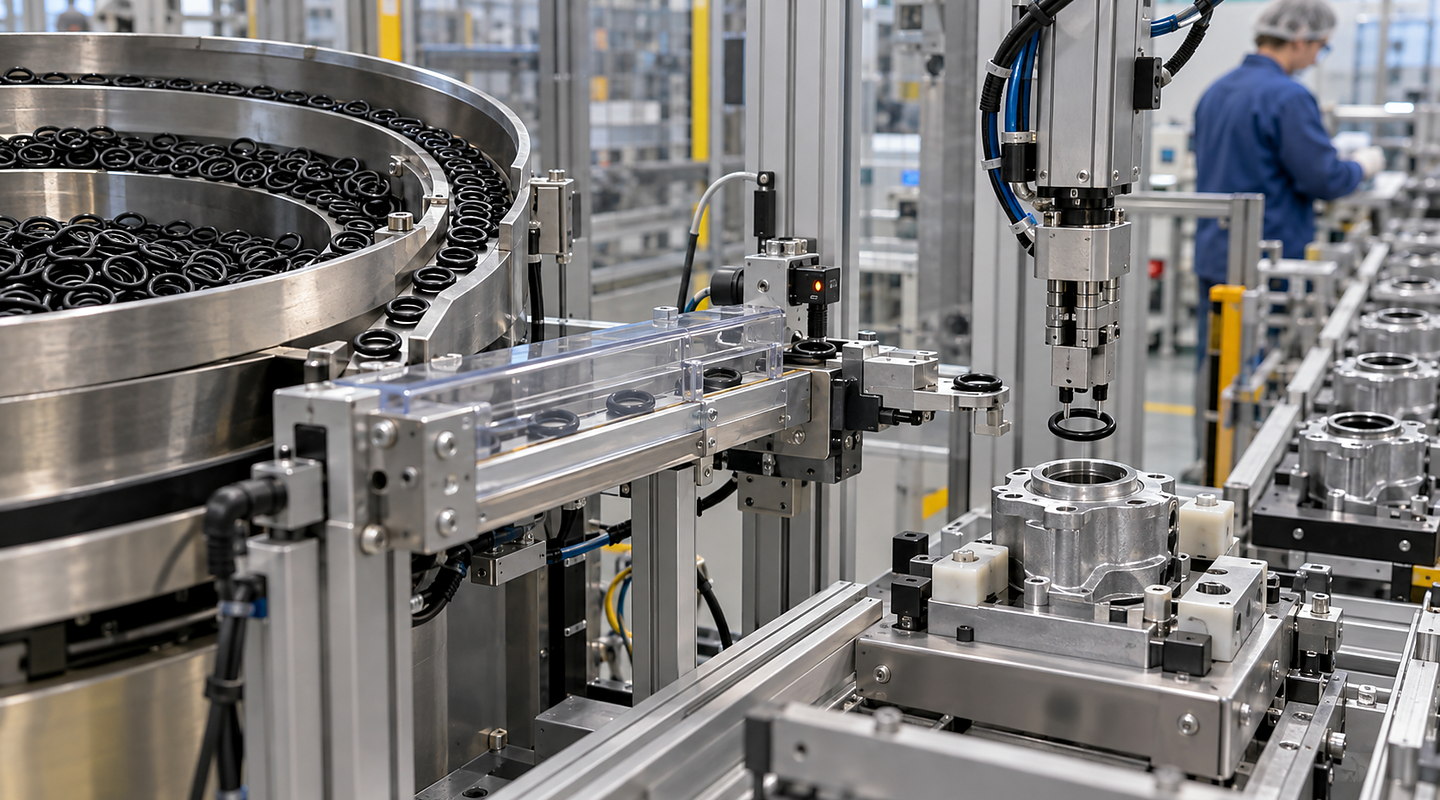
Plan rubber component feeders around real component variation, bulk condition, orientation, usable delivery rate and the downstream interface. Discuss representative part trials with Sorting Solutions. For flexible or metered delivery involving flexible rubber-component feeding, the deciding details include component geometry and variation for flexible rubber-component feeding, bulk condition and replenishment method and jam, damage and recovery acceptance checks.

Discuss your application
Your application

Details worth resolving early for flexible or metered delivery involving flexible rubber-component feeding

Question 1

Component Geometry and Variation for Flexible Rubber-Component Feeding

For flexible or metered delivery involving flexible rubber-component feeding, describe the current position, required outcome, acceptable limits and known exceptions for component geometry and variation for flexible rubber-component feeding. That lets us compare options against your real production rather than one nominal value.

Question 2

Surface, Fragility and Entanglement Behaviour

For flexible or metered delivery involving flexible rubber-component feeding, describe the current position, required outcome, acceptable limits and known exceptions for surface, fragility and entanglement behaviour. That lets us compare options against your real production rather than one nominal value.

Question 3

Bulk Condition and Replenishment Method

Describe how components are stored, loaded and replenished, including normal fill levels and any joining, overlap or distortion after bulk contact. Include the condition following a receiving-machine stop rather than assessing only freshly separated samples.

Question 4

Required Orientation and Delivery Rate

State the accepted orientation, required demand pattern and what counts as a completed delivery. Record usable output at the downstream process together with pauses, rejected presentations and manual separation; nominal feeder output alone is not the acceptance measure.

Question 5

Escapement and Downstream Pick Interface

Use the actual or representative receiving fixture to assess support, pick or transfer and release. Confirm permitted contact and deformation, then observe the component's shape and location after the handling force is removed.

Question 6

Jam, Damage and Recovery Acceptance Checks

For flexible or metered delivery involving flexible rubber-component feeding, describe the current position, required outcome, acceptable limits and known exceptions for jam, damage and recovery acceptance checks. That lets us compare options against your real production rather than one nominal value.

Your operating cycle

Plan for more than automatic running

Include replenishment, normal production, planned change, short stops, fault recovery, cleaning and maintenance for flexible or metered delivery involving flexible rubber-component feeding. A fast automatic step can still leave your team with a slow or awkward overall process.

Prove the result

Test flexible or metered delivery involving flexible rubber-component feeding against representative components and difficult bulk-presentation conditions

Normal production

Run the agreed product or part mix for flexible or metered delivery involving flexible rubber-component feeding at your intended operating pattern.

Difficult conditions

Include credible extremes for component geometry and variation for flexible rubber-component feeding and surface, fragility and entanglement behaviour.

Fault and recovery

Agree how a missing, joined or incorrectly presented part and an interrupted transfer will be handled for this application. Keep the assessed recovery arrangement and the checks for restored accepted delivery in the test record; do not infer automatic recovery from a short normal run.

Important limits

Be clear about what the trial has shown

Compare with Bulk Presentation Using Flexible Rubber-Component Feeding if that operating pattern is closer to your application.