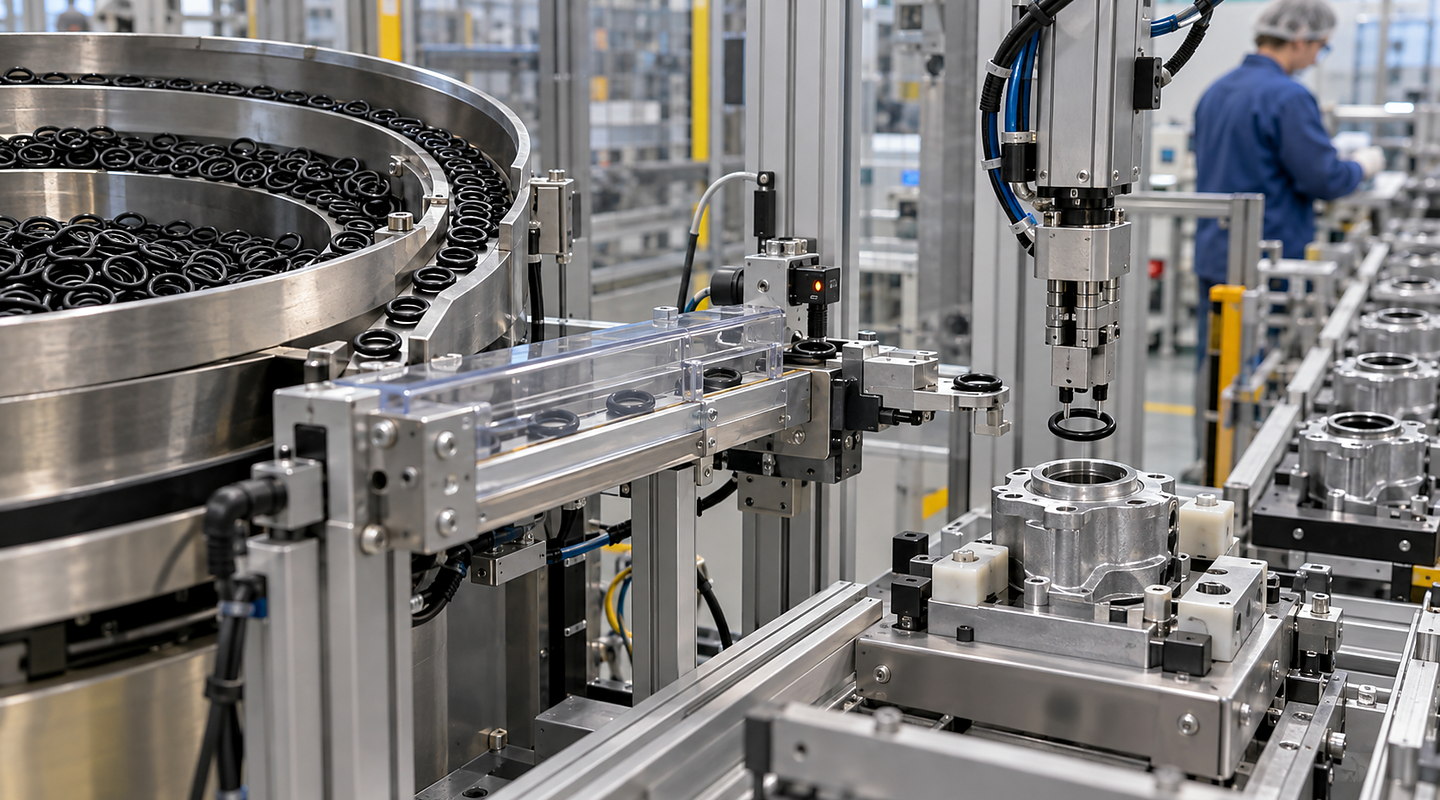
Rubber Component Feeders Rate and recovery checklist
What evidence should be agreed before acceptance testing for rubber component feeders?
In brief
Accept a rubber-component feeding trial against usable delivery at the receiving process and the condition of the part after release. Agree the orientation, permitted deformation, inspection point and any shape-recovery time with the responsible product team before judging the result.
Use representative material, geometry and surface conditions through normal fill levels, replenishment and stop-start cases. Record sticking, rejected presentations, damage and intervention separately from accepted output; the support guide explains useful records when behaviour changes.
On the production floor
Turn your production information into clearer decisions — Rubber Component Feeders
Plan rubber component feeders around real component variation, bulk condition, orientation, usable delivery rate and the downstream interface. Discuss representative part trials with Sorting Solutions. Use this guide to resolve jam, damage and recovery acceptance checks before it limits the final system.
Jam, Damage and Recovery Acceptance Checks: condition, range and effect on your process
Current condition
Record the component and batch or variant, surface treatment, storage context, fill level and equipment settings for each run. Define the inspection point after transfer and release, the acceptable condition and who can approve the result.
Realistic range
Include the normal flexibility and supplier range, realistic bulk overlap, and the joined or folded cases actually encountered. Agree representative replenishment, pauses and receiving-machine stops so the assessment covers sustained behaviour as well as a short normal run.
Effect on the system
Record any adjustment, manual separation or reset needed and its effect on usable delivery and part condition. If a result falls outside the agreed range, identify the unresolved cause and the relevant repeat check before treating the trial as accepted.
Before you contact us
Five questions about jam, damage and recovery acceptance checks for your application
Who can confirm this information?Identify the person responsible for jam, damage and recovery acceptance checks in production, quality, engineering or operations.
How representative is the sample?Include age, supplier, batch, environment and upstream process state where they affect rubber component feeders.
What is the difficult condition?Include stuck pairs, folds, overlap, release failure and lasting distortion where they occur in production. Agree the assessment method and permitted response rather than assuming the feeder can handle every example.
How will you judge the result?Agree the method, repetitions, acceptable range, result record and the response if the observed result falls outside the agreed range.
What else must be coordinated?Your final rubber component feeders scope must also account for escapement and downstream pick interface, jam, damage and recovery acceptance checks, current regulations and the conditions at your site.
Connected details
Review jam, damage and recovery acceptance checks as part of the complete system
Question 1
Component Geometry and Variation for Flexible Rubber-Component Feeding
For Rubber Component Feeders Rate and recovery checklist, describe the current position, required outcome, acceptable limits and known exceptions for component geometry and variation for flexible rubber-component feeding. That lets us compare options against your real production rather than one nominal value.
Question 2
Surface, Fragility and Entanglement Behaviour
For Rubber Component Feeders Rate and recovery checklist, describe the current position, required outcome, acceptable limits and known exceptions for surface, fragility and entanglement behaviour. That lets us compare options against your real production rather than one nominal value.
Question 3
Bulk Condition and Replenishment Method
For Rubber Component Feeders Rate and recovery checklist, describe the current position, required outcome, acceptable limits and known exceptions for bulk condition and replenishment method. That lets us compare options against your real production rather than one nominal value.
Question 4
Required Orientation and Delivery Rate
For Rubber Component Feeders Rate and recovery checklist, describe the current position, required outcome, acceptable limits and known exceptions for required orientation and delivery rate. That lets us compare options against your real production rather than one nominal value.
Question 5
Escapement and Downstream Pick Interface
For Rubber Component Feeders Rate and recovery checklist, describe the current position, required outcome, acceptable limits and known exceptions for escapement and downstream pick interface. That lets us compare options against your real production rather than one nominal value.
Question 6
Jam, Damage and Recovery Acceptance Checks
For Rubber Component Feeders Rate and recovery checklist, describe the current position, required outcome, acceptable limits and known exceptions for jam, damage and recovery acceptance checks. That lets us compare options against your real production rather than one nominal value.