Information and training
Provide current operating, maintenance and safety information for Rubber Component Feeders, plus settings, software backups, training and any outstanding actions.
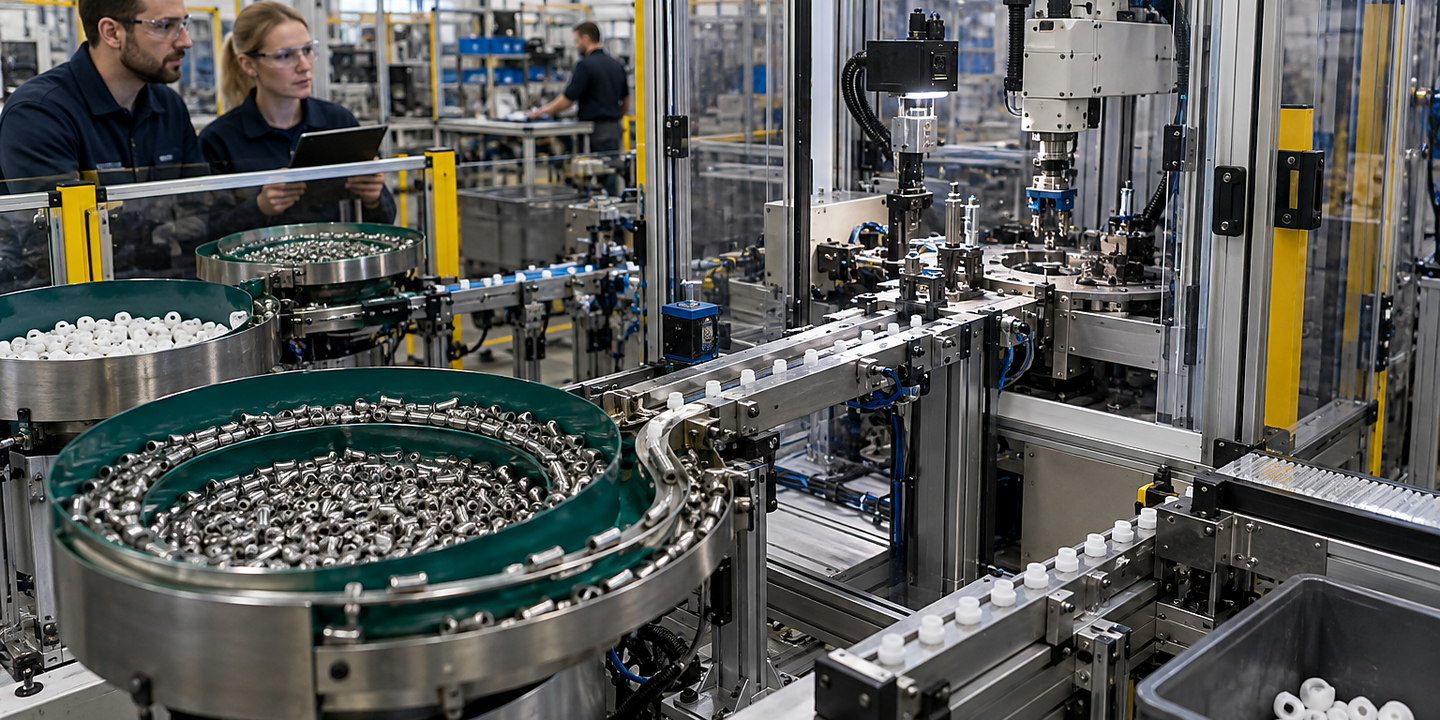
Plan documentation, training, spares, maintenance and change control for rubber component feeders.
For rubber-component feeder support, record what has changed in the part, its surface condition, the bulk load and the receiving process before changing settings. A sticking pair, a folded part and a component that fails to release may need different investigations.
Keep the equipment state, part batch or variant, relevant settings and observed symptoms with the support enquiry. Compare the evidence with the agreed delivery, damage and recovery checks; use the approved intervention method for the installation.
Plan rubber component feeders around real component variation, bulk condition, orientation, usable delivery rate and the downstream interface. Discuss representative part trials with Sorting Solutions. Plan the information, access and response needed to keep your operation running safely and consistently.
Discuss your application

Provide current operating, maintenance and safety information for Rubber Component Feeders, plus settings, software backups, training and any outstanding actions.
Plan inspection and cleaning around the surfaces that support, separate, orient and release the rubber part. Record relevant residues, wear or changes in contact condition, and use only methods permitted for the component and equipment; an unapproved handling aid can change the feeding result.
Give the people responsible for bulk presentation using flexible rubber-component feeding clear fault information, safe diagnostic access, escalation routes and a controlled restart.
Reassess feeding evidence when material flexibility, supplier, geometry, coating, lubrication or storage condition changes. Compare accepted delivery and component condition after release before carrying forward settings or results from the previous part condition.
Record the part variant and batch, normal surface condition, fill level, recent replenishment or receiving-machine stop, active settings and where the symptom appears. Note whether parts remain joined, fold, lose orientation or stay attached at release, and retain representative examples where permitted.
Use the approved isolation or intervention method for bulk presentation using flexible rubber-component feeding; never defeat a safeguard or force an output to shorten diagnosis.
Follow the documented recovery sequence, then confirm accepted single-part presentation and the component condition after release at the receiving fixture. Retain the observation, action and result; a restarted feeder alone does not show that usable delivery has been restored.
A new variant or higher rate can alter component geometry and variation for flexible rubber-component feeding, surface, fragility and entanglement behaviour, bulk condition and replenishment method, required orientation and delivery rate, escapement and downstream pick interface, and jam, damage and recovery acceptance checks. Record the change, assess consequences and repeat the relevant trial or validation rather than assuming the previous result transfers.