In brief

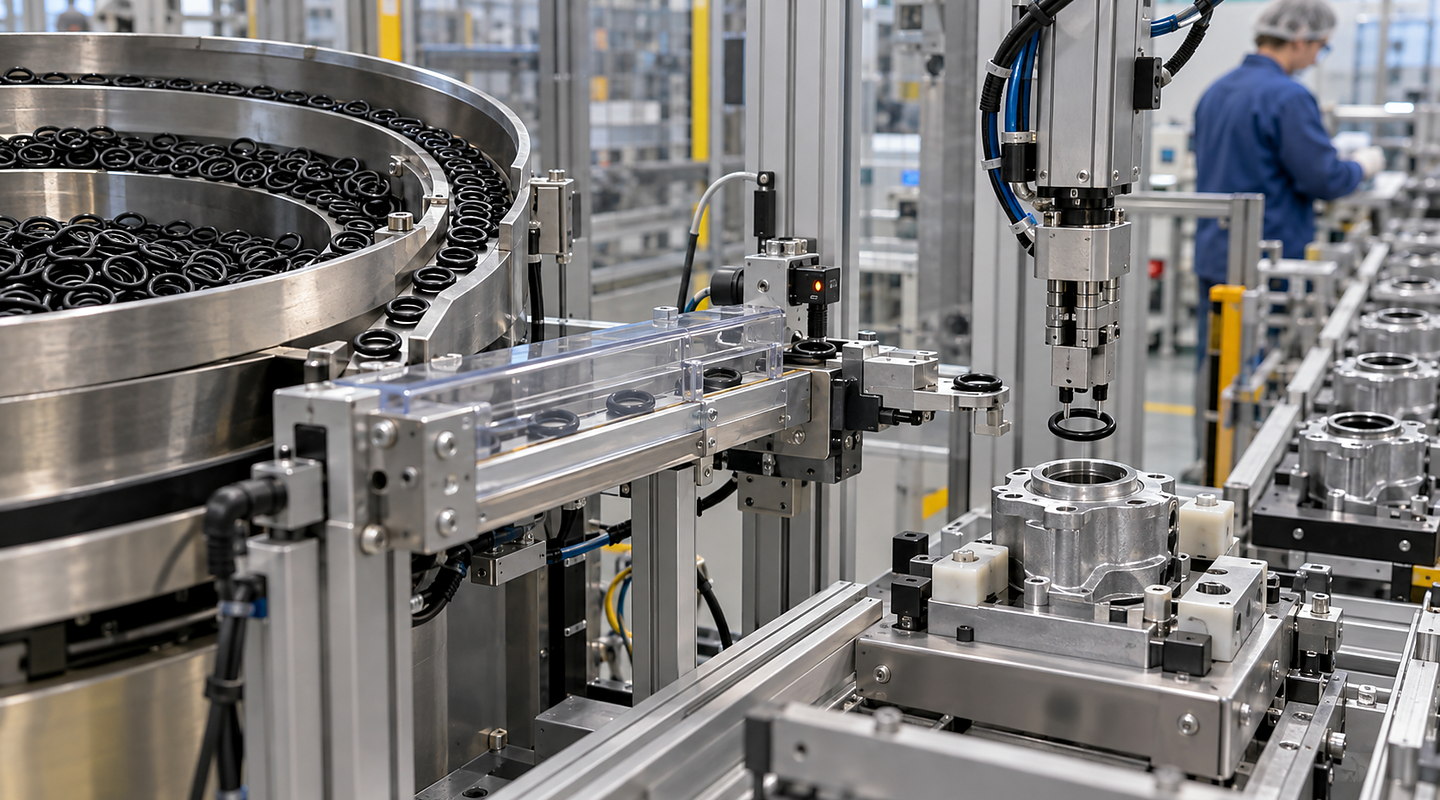
For bulk rubber-component presentation, establish how the supplied parts overlap, attach or fold before choosing a feeding method. Use representative geometry, material and surface conditions, and define the single-part orientation and condition needed at the receiving operation.

Compare normal and difficult bulk loads through the full separation-to-release sequence. The acceptance guide helps distinguish usable delivery from feeder movement or parts leaving a hopper.

On the production floor

Plan for the conditions your team handles every day — Rubber Component Feeders

Plan rubber component feeders around real component variation, bulk condition, orientation, usable delivery rate and the downstream interface. Discuss representative part trials with Sorting Solutions. For bulk presentation using flexible rubber-component feeding, the deciding details include component geometry and variation for flexible rubber-component feeding, bulk condition and replenishment method and jam, damage and recovery acceptance checks.

Discuss your application
Your application

Details worth resolving early for bulk presentation using flexible rubber-component feeding

Question 1

Component Geometry and Variation for Flexible Rubber-Component Feeding

Provide drawings and representative production variants across the geometry and flexibility range. Record the features used for support or orientation, permitted contact areas and acceptable deformation; a nominal dimension alone does not describe how the part behaves in bulk.

Question 2

Surface, Fragility and Entanglement Behaviour

Keep coatings, lubrication, residues and storage condition representative of production. Include joined, folded or nested examples where encountered. Do not introduce powder, oil or another handling aid for the trial unless the component and downstream process permit it, and record any approved change.

Question 3

Bulk Condition and Replenishment Method

For bulk presentation using flexible rubber-component feeding, describe the current position, required outcome, acceptable limits and known exceptions for bulk condition and replenishment method. That lets us compare options against your real production rather than one nominal value.

Question 4

Required Orientation and Delivery Rate

For bulk presentation using flexible rubber-component feeding, describe the current position, required outcome, acceptable limits and known exceptions for required orientation and delivery rate. That lets us compare options against your real production rather than one nominal value.

Question 5

Escapement and Downstream Pick Interface

Define how one accepted component is presented, transferred and released into the next operation. Check whether it remains attached to another part or the handling tool, and whether it returns to the required shape and location at the receiving fixture.

Question 6

Jam, Damage and Recovery Acceptance Checks

For bulk presentation using flexible rubber-component feeding, describe the current position, required outcome, acceptable limits and known exceptions for jam, damage and recovery acceptance checks. That lets us compare options against your real production rather than one nominal value.

Your operating cycle

Plan for more than automatic running

Include replenishment, normal production, planned change, short stops, fault recovery, cleaning and maintenance for bulk presentation using flexible rubber-component feeding. A fast automatic step can still leave your team with a slow or awkward overall process.

Prove the result

Test bulk presentation using flexible rubber-component feeding against representative components and difficult bulk-presentation conditions

Normal production

Run the agreed product or part mix for bulk presentation using flexible rubber-component feeding at your intended operating pattern.

Difficult conditions

Include credible extremes for component geometry and variation for flexible rubber-component feeding and surface, fragility and entanglement behaviour.

Fault and recovery

Define the response required for an inseparable pair, lost orientation or unsuccessful release. Agree how these conditions will be assessed and the permitted recovery method; do not assume automatic detection or recovery without application evidence.

Important limits

Be clear about what the trial has shown

Compare with Flexible or Metered Delivery Involving Flexible Rubber-Component Feeding if that operating pattern is closer to your application.