Rubber Component Feeders: How the Process Works
Follow the operating sequence for rubber component feeders, from preparing the input and controlling the main task to handling exceptions and checking results.
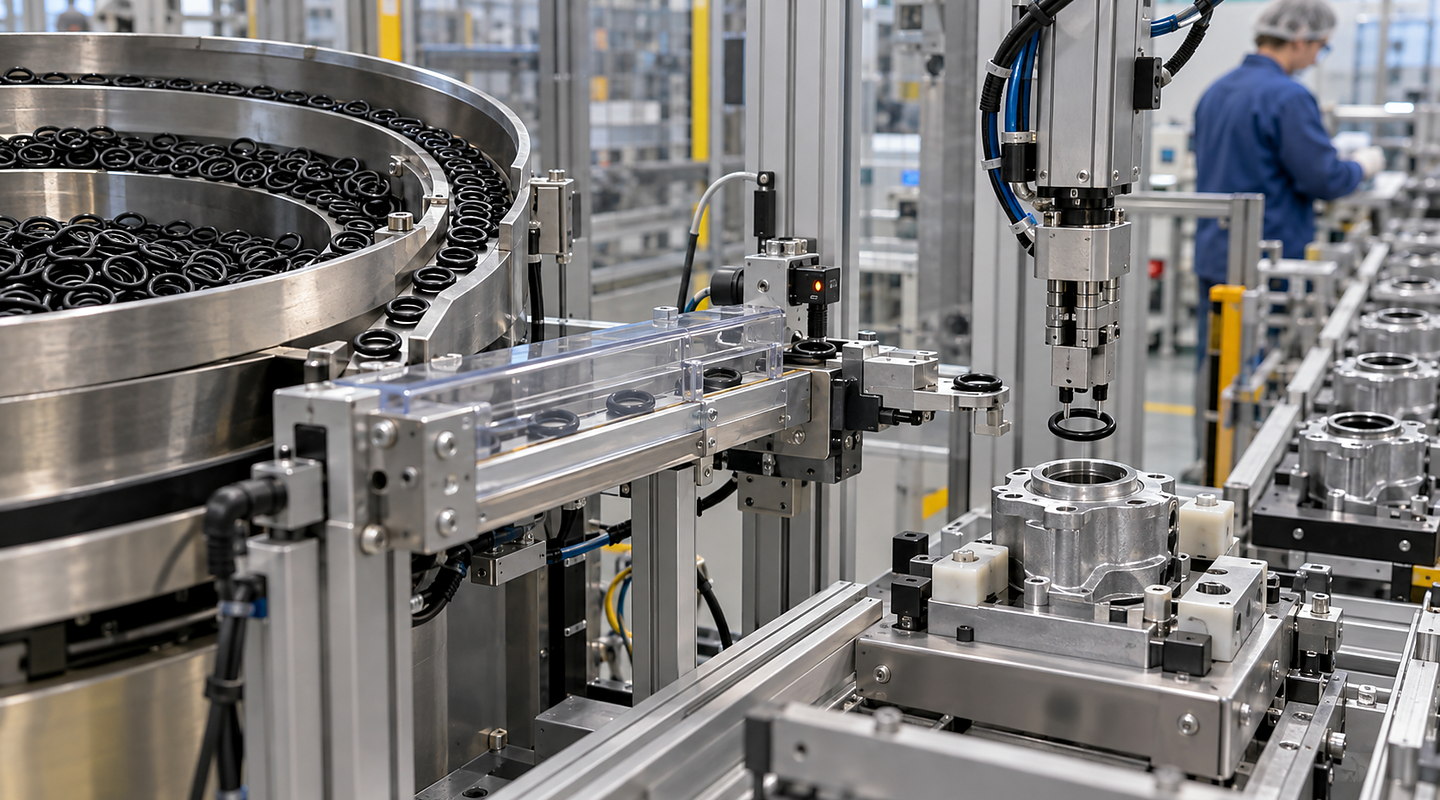
Assess rubber feeding from the supplied bulk load through separation, orientation, transfer and release into the receiving operation. Include the normal flexibility and surface-condition range, and judge the delivered part after any required shape recovery.
A part reaching a pick point has not necessarily completed delivery. Use the selection guide to compare presentation routes and agree accepted-delivery and damage evidence for the full sequence.
Understand the complete route from input to accepted output — Rubber Component Feeders
Follow representative rubber components from loading to the actual handover or a representative receiving fixture. Record sticking, overlap, folding, rejected presentation and manual intervention separately from accepted delivery. Keep surface treatment and storage condition with the trial record.
Discuss your application

Four clear stages for rubber component feeders
At each stage, you can review how component geometry and variation for flexible rubber-component feeding and jam, damage and recovery acceptance checks affect the next commitment.
- 01
Review Representative Production Components
Supply normal production samples across the geometry, material, flexibility and supplier range, including the sticking or distortion already encountered. State permitted contact surfaces, acceptable deformation and the orientation needed by the receiving process.
- 02
Trial Separation, Orientation and Presentation
Compare separation and presentation using parts in their normal surface condition and realistic bulk loads. Include stuck, folded or overlapping examples where they occur; assess another presentation route if the proposed method cannot separate them without unacceptable effects.
- 03
Develop Tooling, Controls and the Downstream Interface
Define the required single-part orientation and the complete pick or transfer, including release. Use the receiving fixture or a representative interface to check location, shape recovery and relevant downstream demand or stop behaviour.
- 04
Challenge Delivery, Replenishment, Jams and Recovery
Run the agreed replenishment, normal fill-level and stop-start cases under the application test plan. Record accepted delivery, interventions and component condition after release, including tears, stretching, folds or relevant surface changes, against the product team's agreed limits.
Decisions and results stay connected
| Stage | What happens | What you can review |
|---|---|---|
| Review Representative Production Components | Confirm the requirements for flexible rubber-component feeding, the operating range and the definition of a good result. | Your samples, current information and any points that still need confirming. |
| Trial Separation, Orientation and Presentation | Compare workable methods using component geometry and variation for flexible rubber-component feeding and surface, fragility and entanglement behaviour from your real production. | The trial method, observations and reason for the recommended route. |
| Develop Tooling, Controls and the Downstream Interface | Resolve bulk condition and replenishment method, required orientation and delivery rate and the physical, control, safety and data connections. | The agreed layout, line connections and any changes from the proposal. |
| Challenge Delivery, Replenishment, Jams and Recovery | Check normal, difficult and fault conditions before your team takes over the system. | Results for escapement and downstream pick interface and jam, damage and recovery acceptance checks, plus actions and operating information. |
Keep connected responsibilities clear
Your final rubber component feeders scope must also account for escapement and downstream pick interface, jam, damage and recovery acceptance checks, current regulations and the conditions at your site.
- Sample trials must include normal, marginal and supplier-variant components.
- Quoted feeder output is not the same as usable delivery at the downstream process.
- Fragile, flexible, magnetic or entangling parts may need a different presentation method.